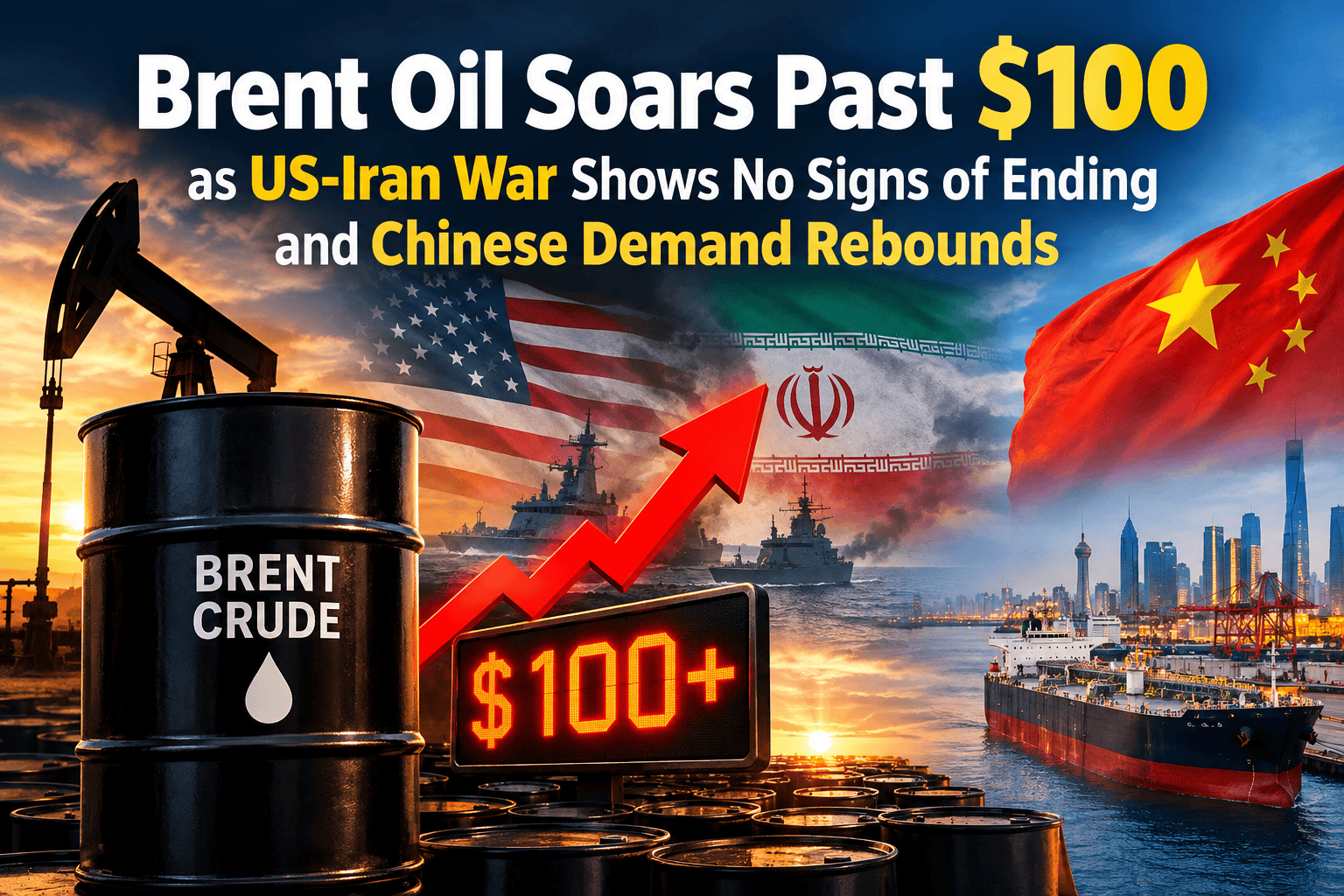
Brent Oil Soars Past $100 as US-Iran War Shows No Signs of Ending and Chinese Demand Rebounds
Brent oil climbed above the US$100 mark on Wednesday for the first time since July. The rise came as fighting between the United States and Iran continued with little hope of a quick end. Fresh Chinese buying also pushed the global benchmark higher.
Futures jumped as much as 2.3 percent in London trading before giving back part of the gain. The latest round of attacks added fresh pressure. Overnight, Iran tried to hit a U.S. Navy warship with ballistic missiles. In response, the U.S. military destroyed five Iranian tankers, Central Command said. The clash has kept tension high in the region for months.
The war has now lasted seven months. It has disrupted oil flows through the Strait of Hormuz, one of the world’s most important shipping lanes. Even so, millions of barrels still move through the waterway every day. Many of those tankers sail with their tracking signals turned off to lower the risk of attack.
Chinese crude purchases have picked up this month. China is the world’s largest oil importer. Earlier in the conflict, Chinese buyers slowed their buying. That pause helped keep prices from rising too fast. Now the buying has returned. Some key market measures are trading at their strongest levels in weeks.
Brent crude has climbed more than 60 percent so far this year. Prices had stayed under the three-digit level for more than three months after a short spike in July. Persian Gulf producers managed to raise their exports during that period. That extra supply limited further gains until recently.
Refined products such as diesel have risen even more sharply. The Middle East conflict has spread toward the Red Sea near Saudi Arabia. The long-running Russia-Ukraine war has also limited fuel supplies. Together these pressures raise the risk of higher inflation. Central bankers around the world are watching the numbers closely.
“The path of least resistance is a strong and steady grind higher as the war enters seven months,” said Darrell Fletcher, managing director for commodities at Bannockburn Capital Markets. “The fundamental picture for products remains bullish with global inventories and reserves deteriorating. In the typical pattern, the U.S. and Iran continue their counterattacks and warnings.”
Before the fighting began, about one-fifth of the world’s oil and liquefied natural gas passed through the Strait of Hormuz on its way to customers worldwide. That share has made every new incident more important for the global market.
Shipping Risks Remain High Despite Continued Flows
Tankers still face a real threat of attack even when they turn off their transponders. Kuwait Petroleum Corp. is sending ships through the strait only “whenever it is safe,” an official said on Wednesday. The careful approach shows how operators are balancing the need to move oil with the danger of further strikes.
The ongoing problems have pushed inventories lower across the globe. Analytics firm Vortexa reports that the amount of oil sitting on ships at sea has fallen by more than 150 million barrels since the middle of July. Lower floating stocks mean less buffer if more supply is cut off suddenly.
Yemen’s Houthi militants have kept up their own attacks on energy sites in Saudi Arabia. The group has hit the kingdom’s 400,000-barrel-a-day Jazan refinery several times in recent weeks. Those strikes add extra pressure to an already tight market for refined fuels such as diesel and gasoline.
“Anxiety over continued and damaging supply disruption, due to the escalation of the conflict between the U.S. and Iran, is significantly higher,” said Tamas Varga, an analyst at brokerage PVM. “Inflationary pressure will affect oil demand, but for now supply is not able to match demand.”
Chinese Buying Helps Drive Prices Higher
The return of Chinese demand has been one of the clearest supports for prices this month. After months of quieter purchasing, Chinese refiners and traders have stepped back into the market. Their activity has lifted several gauges that track buying interest to multi-week highs.
China’s role as the top importer means even modest increases in its purchases can move the global balance. Earlier in the war, the buying slowdown had acted as a lid on prices. Now that lid has lifted. Traders are watching whether the stronger Chinese demand will last through the rest of the year.
At the same time, producers in the Persian Gulf have kept exports flowing where possible. Their ability to raise shipments after the July spike had helped keep Brent below $100 for months. That cushion is now thinner. Any new disruption in the strait or further damage to refining capacity could remove more barrels from the market quickly.
Refined Fuels Feel the Pressure Most
While crude has broken the $100 level, refined products have climbed faster. Diesel prices in particular have shown sharp gains. The conflict’s spread toward the Red Sea has raised risks for shipping lanes that carry fuel as well as crude. Attacks on Saudi facilities have added another layer of worry.
The Russia-Ukraine war continues to limit some traditional supply routes and refining capacity in Europe. The combined effect of two major conflicts has left global fuel stocks under strain. Lower inventories and higher product prices feed into the cost of transport, heating, and manufacturing. Those higher costs can feed through to broader inflation.
Central banks have spent years trying to bring inflation under control. A fresh surge in energy prices would make their job harder. Markets are already pricing in the risk that oil and fuel costs stay elevated for longer.
Market Views Point to Further Gains

Many analysts see limited near-term relief. The pattern of tit-for-tat attacks between the United States and Iran has shown little change. Each new strike raises the chance of wider disruption even if large volumes of oil still manage to leave the region.
Darrell Fletcher’s comment that the path of least resistance is higher prices reflects a view shared by several traders. Global inventories continue to fall. Floating storage has dropped sharply since mid-July. When stocks are low, any fresh supply shock has a bigger impact on prices.
Tamas Varga’s assessment underlines the same point. Anxiety about lasting damage to supply is higher now than it was earlier in the conflict. Demand may eventually feel the effect of higher prices, but for the moment the supply side is not keeping up.
The Strait of Hormuz Remains the Key Chokepoint
The Strait of Hormuz has always been critical. Before the war, roughly 20 percent of world oil and LNG moved through the narrow waterway. That concentration means any threat to shipping there affects markets far beyond the Middle East.
Operators have adapted by sailing with signals off and by choosing safer windows to transit. Kuwait’s statement that it moves tankers only when conditions allow shows the practical limits of that approach. Other producers face the same calculation. The result is that flow continues, yet the risk premium in prices remains high.
Vortexa’s data on lower volumes of oil at sea points to the cumulative effect of months of tension. Ships are spending less time waiting offshore or moving more carefully. That reduction in floating inventory removes a traditional shock absorber from the market.
Broader Energy and Economic Effects
Higher oil prices flow through the entire energy system. Refineries pay more for crude. Consumers pay more for gasoline and diesel. Airlines and shipping companies face higher fuel bills. Those costs can slow economic activity if they persist.
The conflict has already lasted seven months. Each month adds to the uncertainty. Markets have adjusted to the idea that the fighting will not end quickly. That adjustment itself supports higher prices. Traders now treat the risk of further disruption as a regular feature rather than a temporary shock.
Saudi Arabia’s Jazan refinery has become a repeated target. The plant’s 400,000-barrel daily capacity is significant for the regional fuel balance. Repeated hits raise the chance of longer outages. Even temporary shutdowns tighten the refined product market further.
Looking Ahead
Brent’s move above $100 marks a clear psychological level. The last time prices reached that height was in July. The current rise comes with stronger Chinese buying and ongoing military action. Those two factors together have been enough to overcome the extra supply that Gulf producers had managed to deliver earlier.
Whether prices stay above $100 will depend on several things. The pace of Chinese purchases in the coming weeks will matter. Any major new attack on shipping or refining capacity could push prices higher still. On the other side, any unexpected increase in exports or a pause in the fighting could ease the pressure.
For now the market tone remains firm. Inventories are lower. Demand from the largest importer has improved. Military activity continues. Under those conditions, many observers expect the upward pressure on oil and refined products to remain in place.
The combination of geopolitics and physical market tightness has returned Brent to levels not seen for months. With the war in its seventh month and no clear path to a ceasefire, traders are preparing for prices that stay elevated. Central banks, consumers, and energy companies will all feel the effects if the current trend continues.
About the Author


Leave a Reply